
AI-powered Venue Finder
TL;DR
Problem:
HeadBox’s core marketplace model was optimised for event brief volume (demand side), not bookings. This resulted in unqualified guest briefs entering the system, paying users (supply side) being frustrated due to proactively reaching out to low-intent guests, therefore churning (LeadFeed Churn was 55%).
Solution:
Optimized the demand-side brief journey to rebalance marketplace dynamics via an AI-powered processing and recommendations engine. By delivering hyper-relevant venue matches, we increased guest conversion while establishing a 'Spotlight Partner' monetisation model through algorithmic boosting.
Impact:
Stakeholders:
CEO, CTO, Head of Marketing, Head of Venue Sales
Timescale:
2 Months end-to-end , 2 week experiment cycles
The Systemic problem
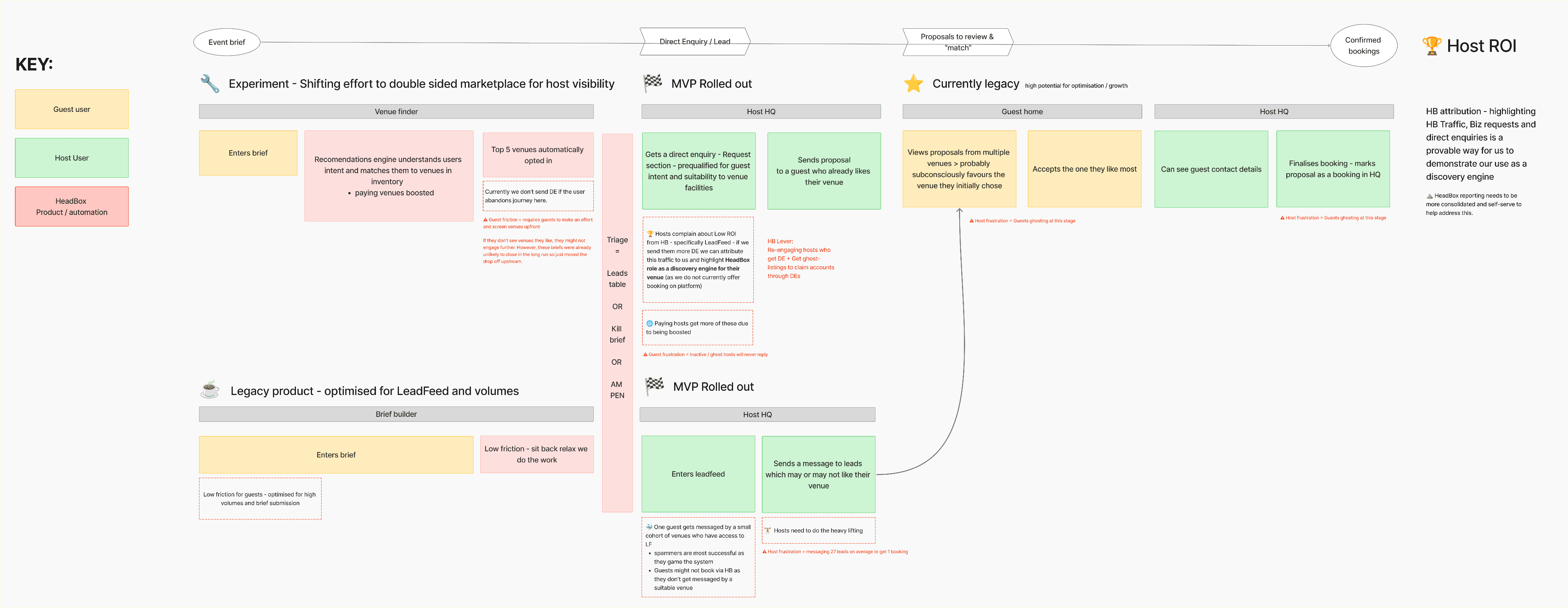
The legacy model rewarded volume over intent: low-qualification briefs were broadcast widely, favouring speed over relevance and overwhelming hosts with poor-fit leads.
27+ messages were often needed to close a booking, while marketing optimised for submissions inflated volumes without improving marketplace efficiency.
No guest research had been conducted in 4+ years, so I recruited and interviewed 10 event bookers (5 corporate, 5 personal).
Insight: Every brief had a non-negotiable “secret ingredient.” If a venue lacked it, it was instantly rejected.
“…some of the venues messaging me were clearly not fit for what I needed. It felt like they hadn’t read my brief, and I the venues who messaged me did not meet what I wanted... I didn’t book the event via HeadBox"
~ Tracy, corporate booker
Hypothesis
Capturing guest intent earlier and encouraging venue shortlists before submission reduces low-quality briefs, improving host ROI and marketplace health.
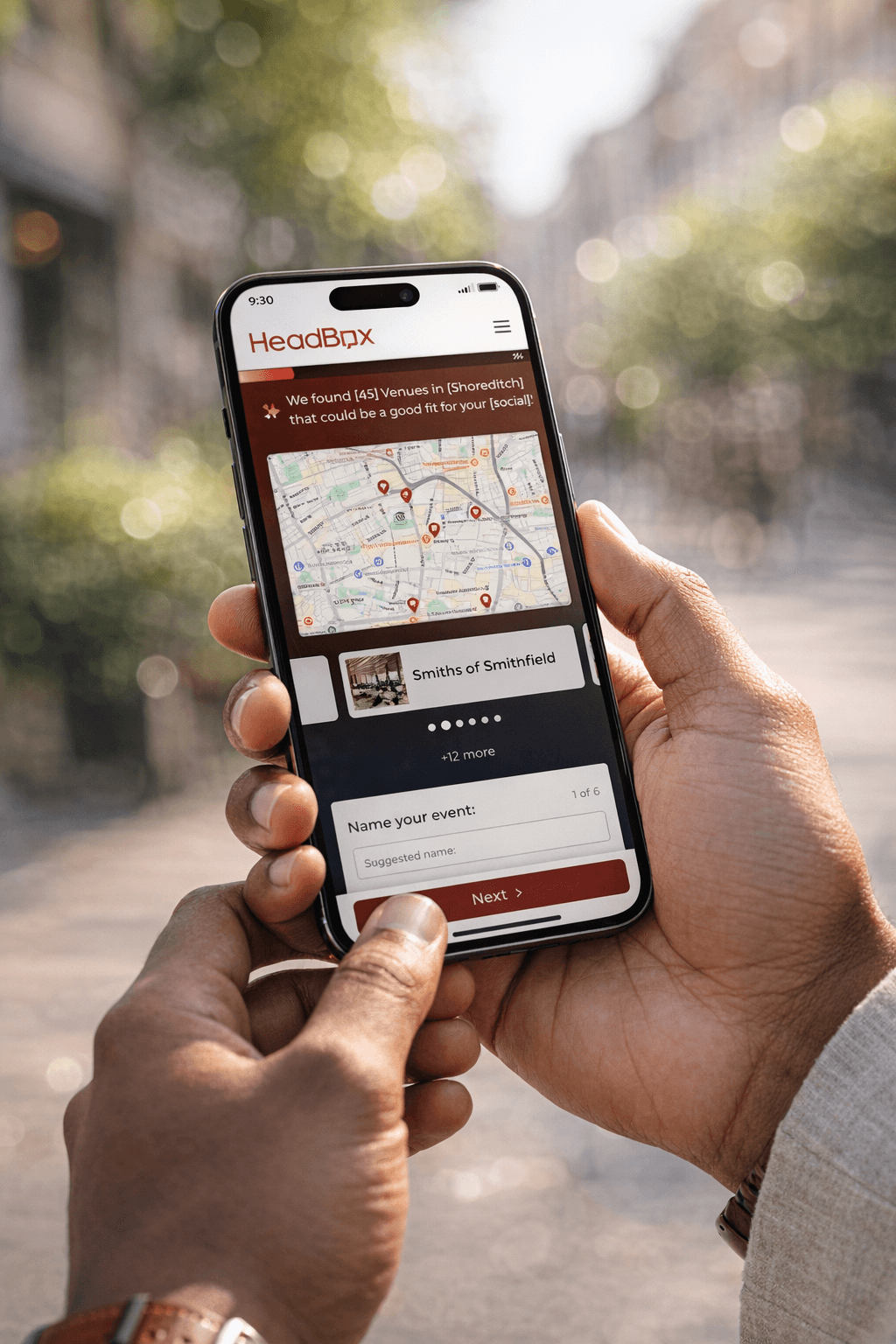
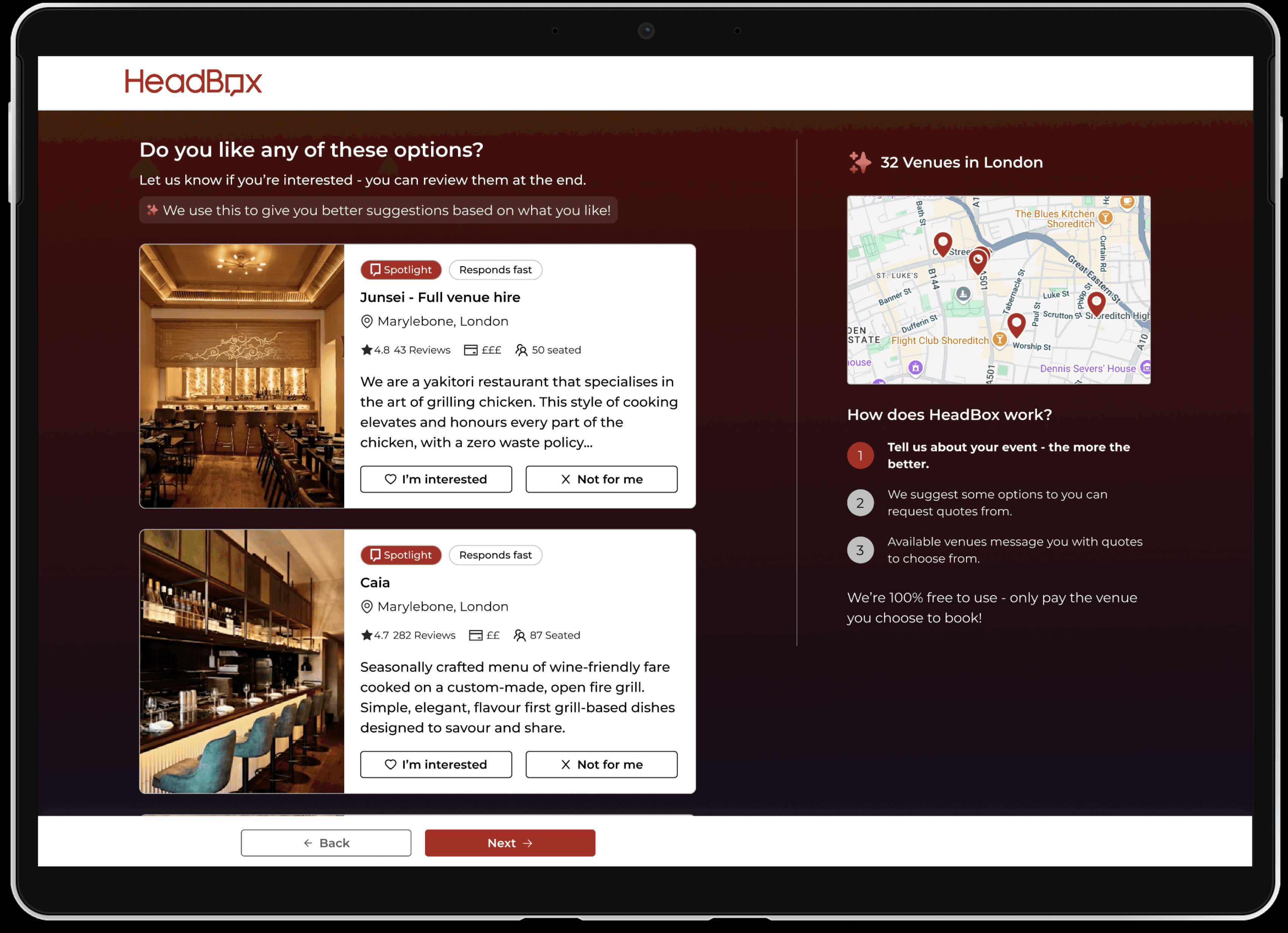
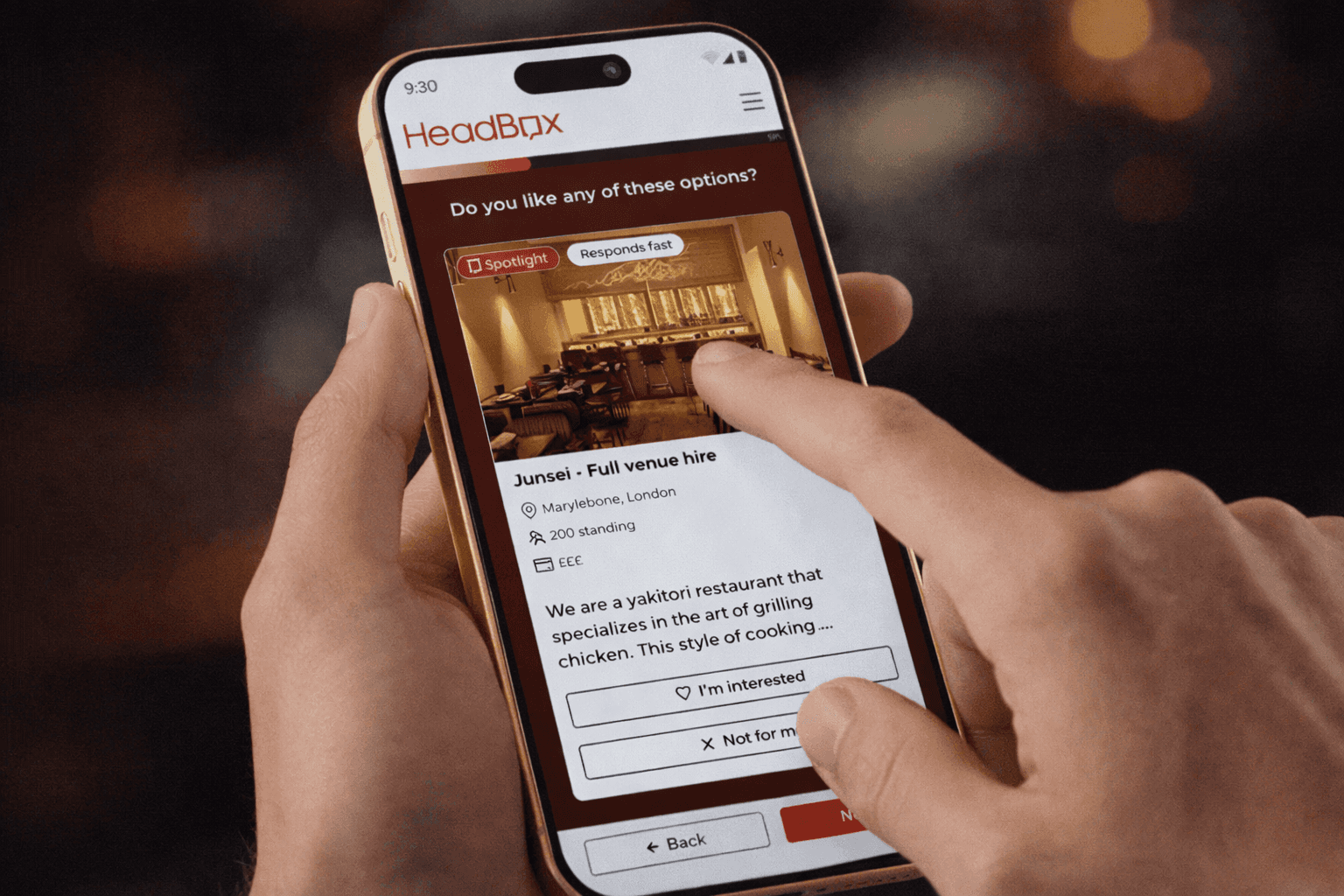
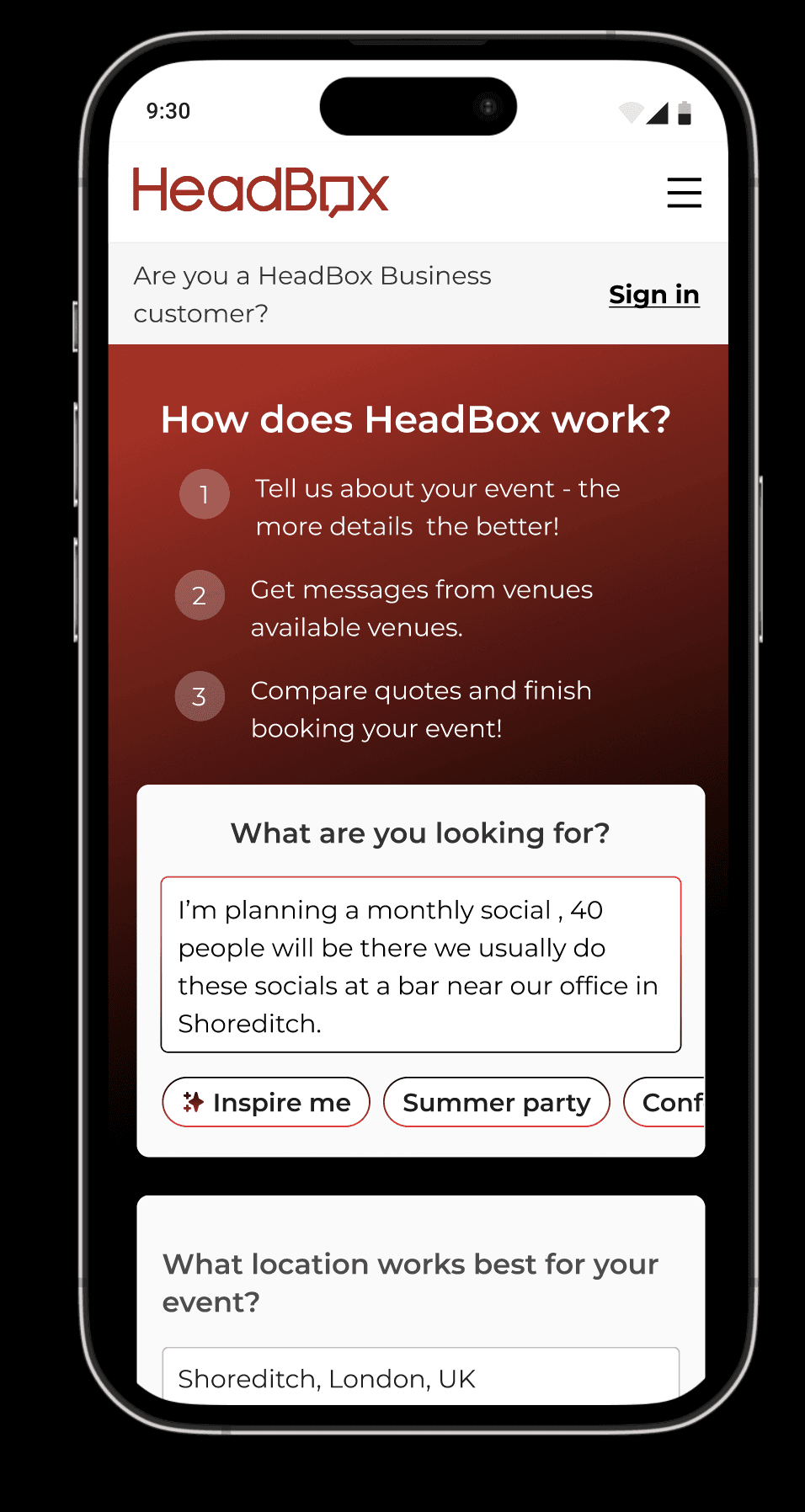
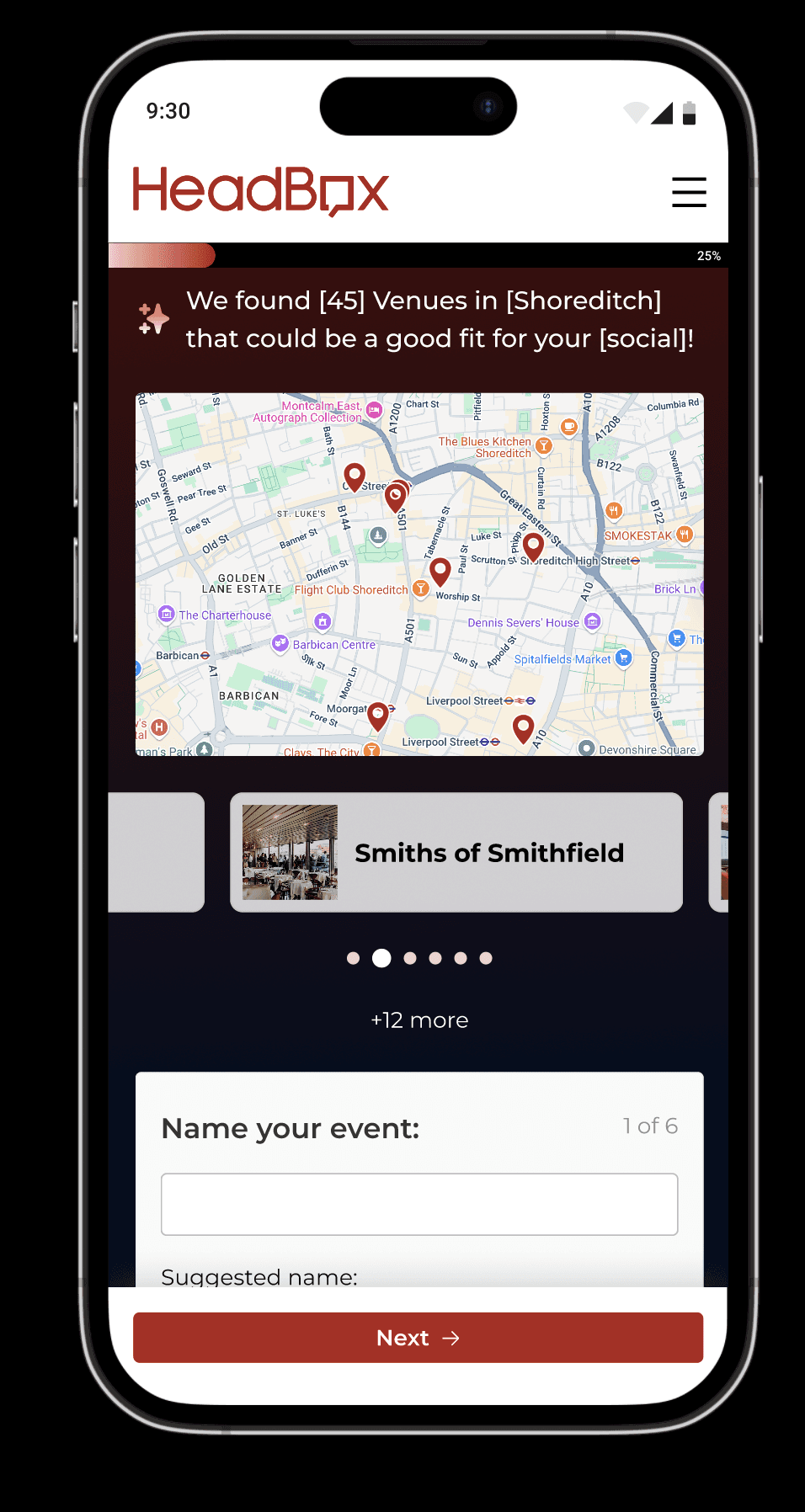
Venue Finder connects guests to relevant venues through AI-powered matching, parsing requirements via LLMs and ranking results from vectorised inventory before guests compare quotes and book.
13 step process, gathering requirements from preset options - 83% drop off rate
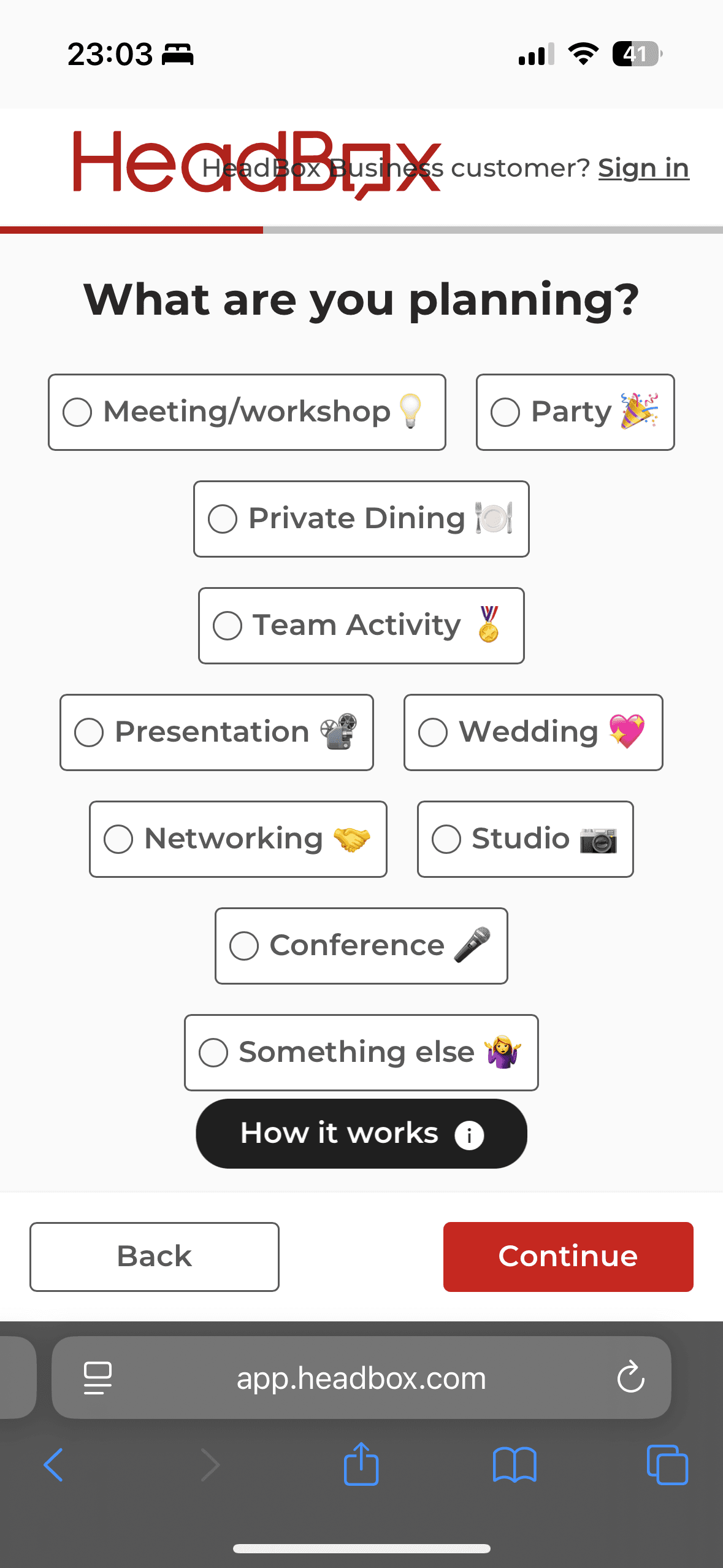
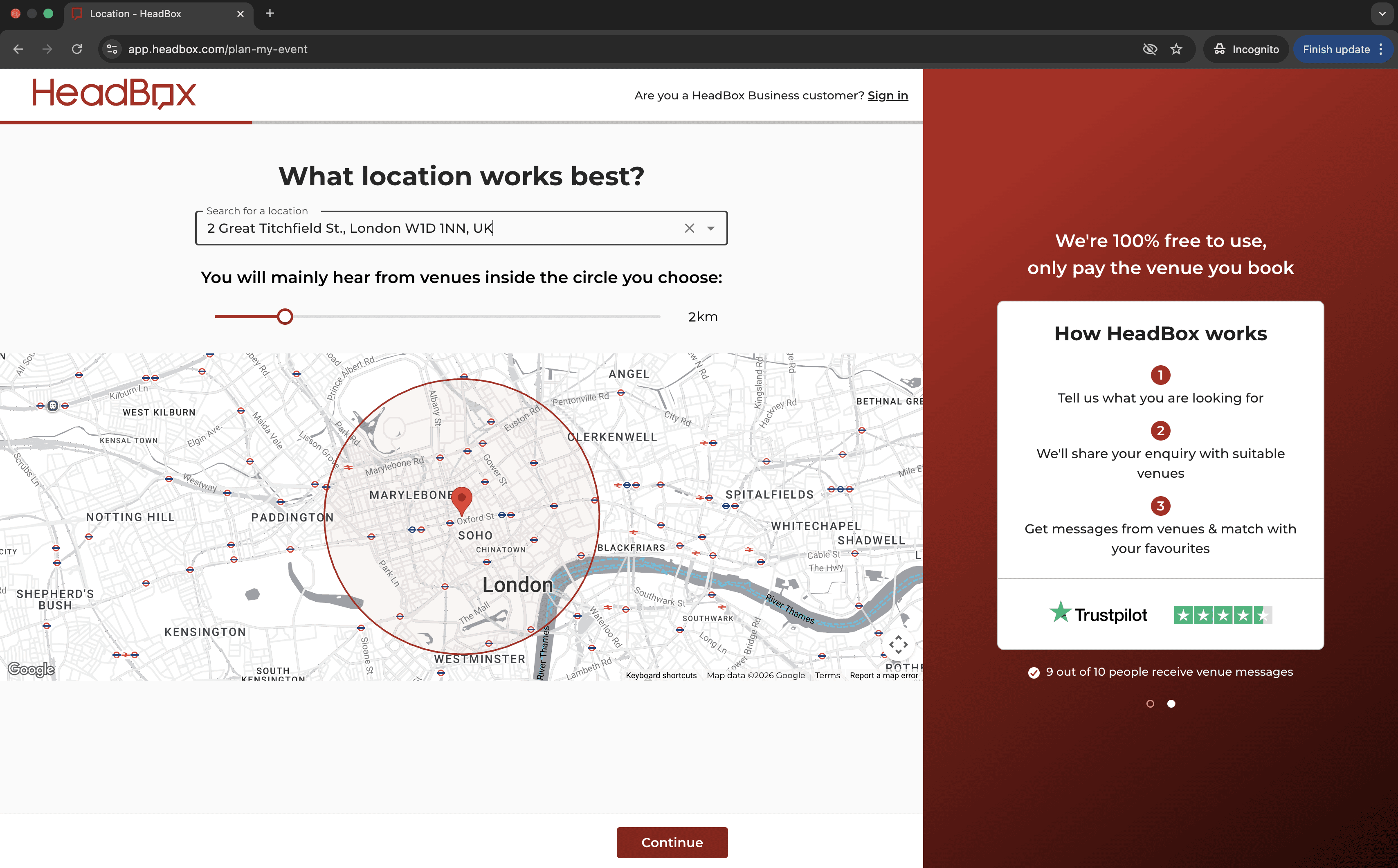
13 step process, gathering requirements from preset options - 83% drop off rate
Results:
We introduced:
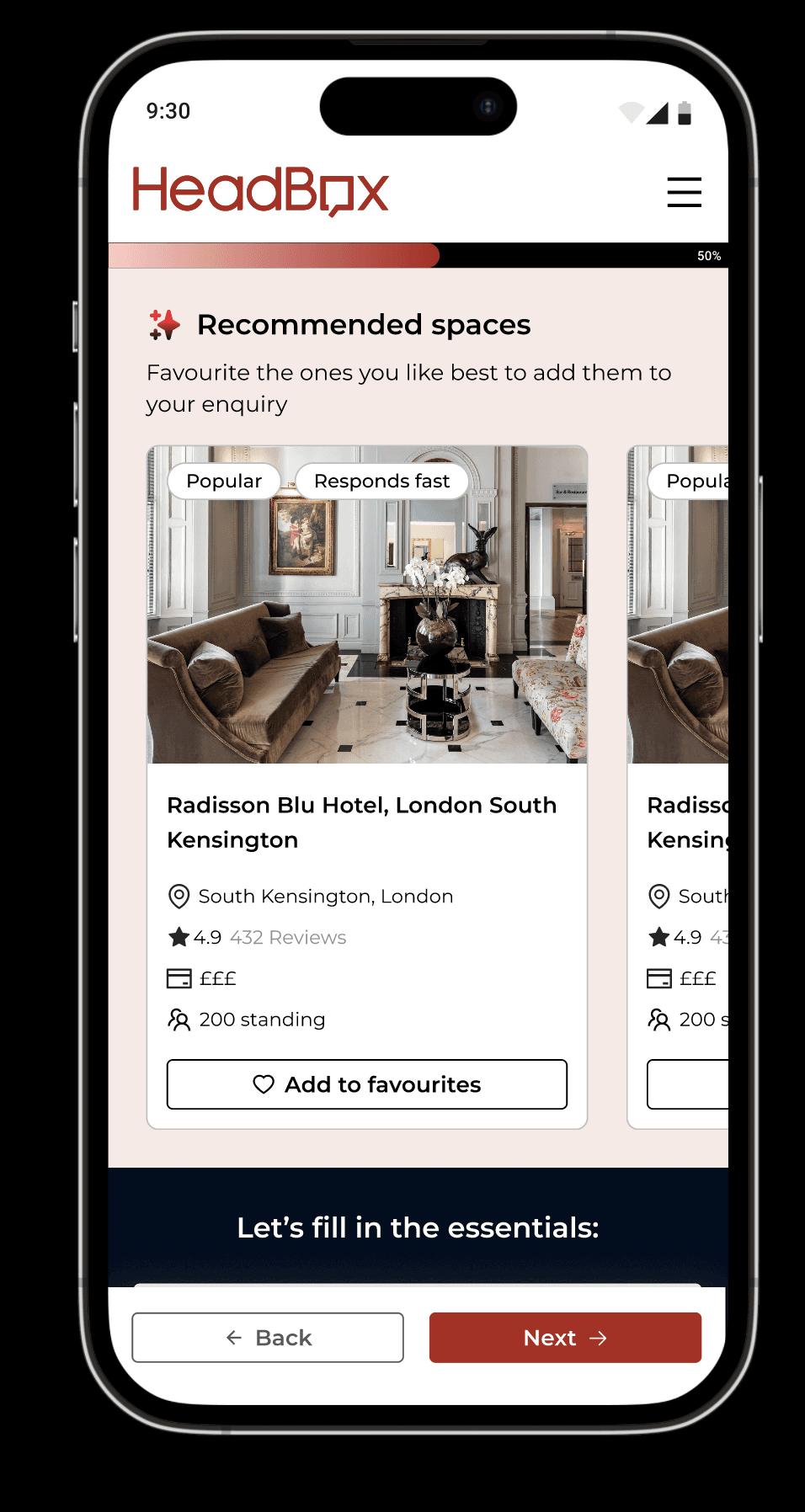
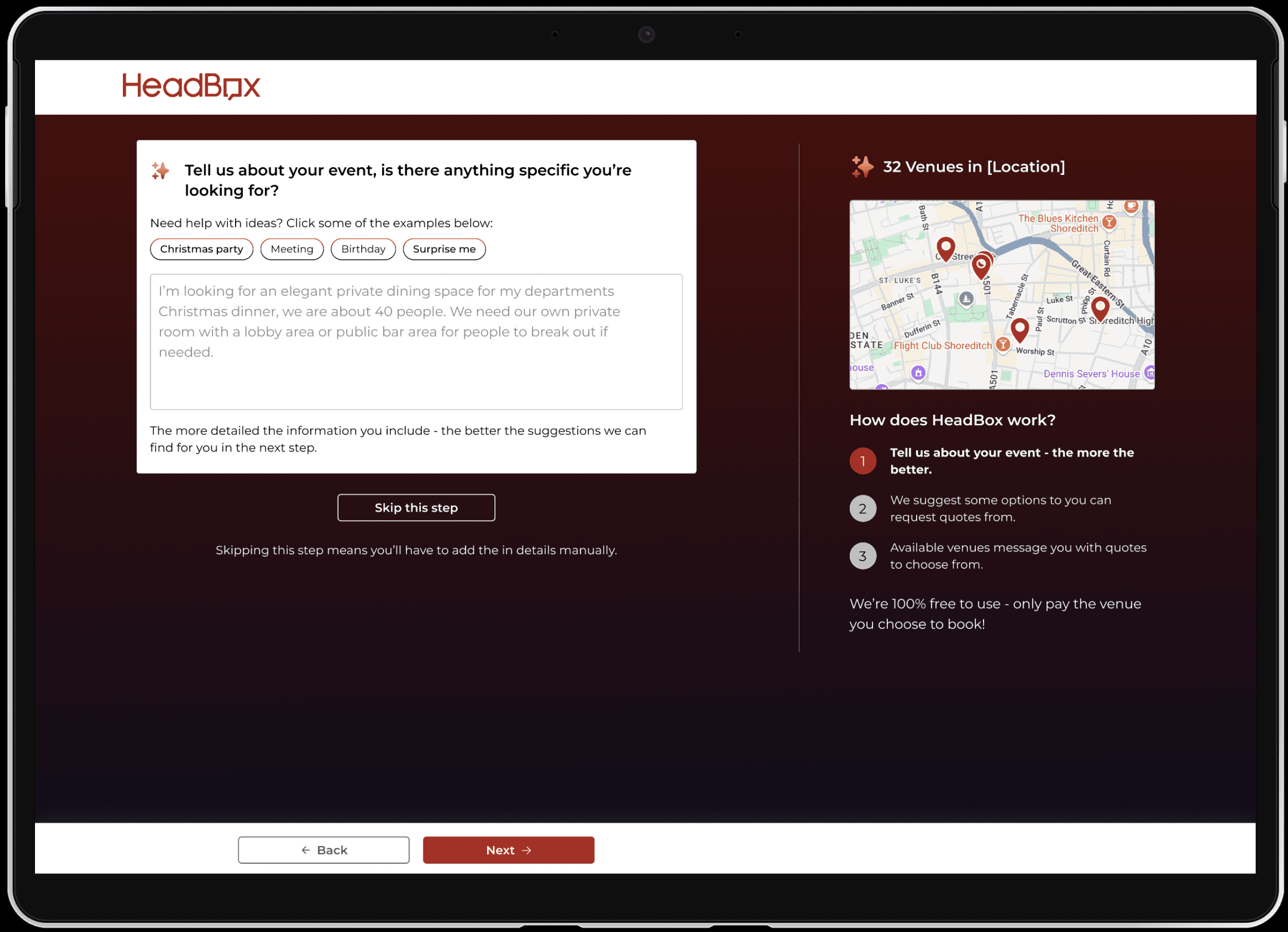
AI-guided prompt to articulate intent-
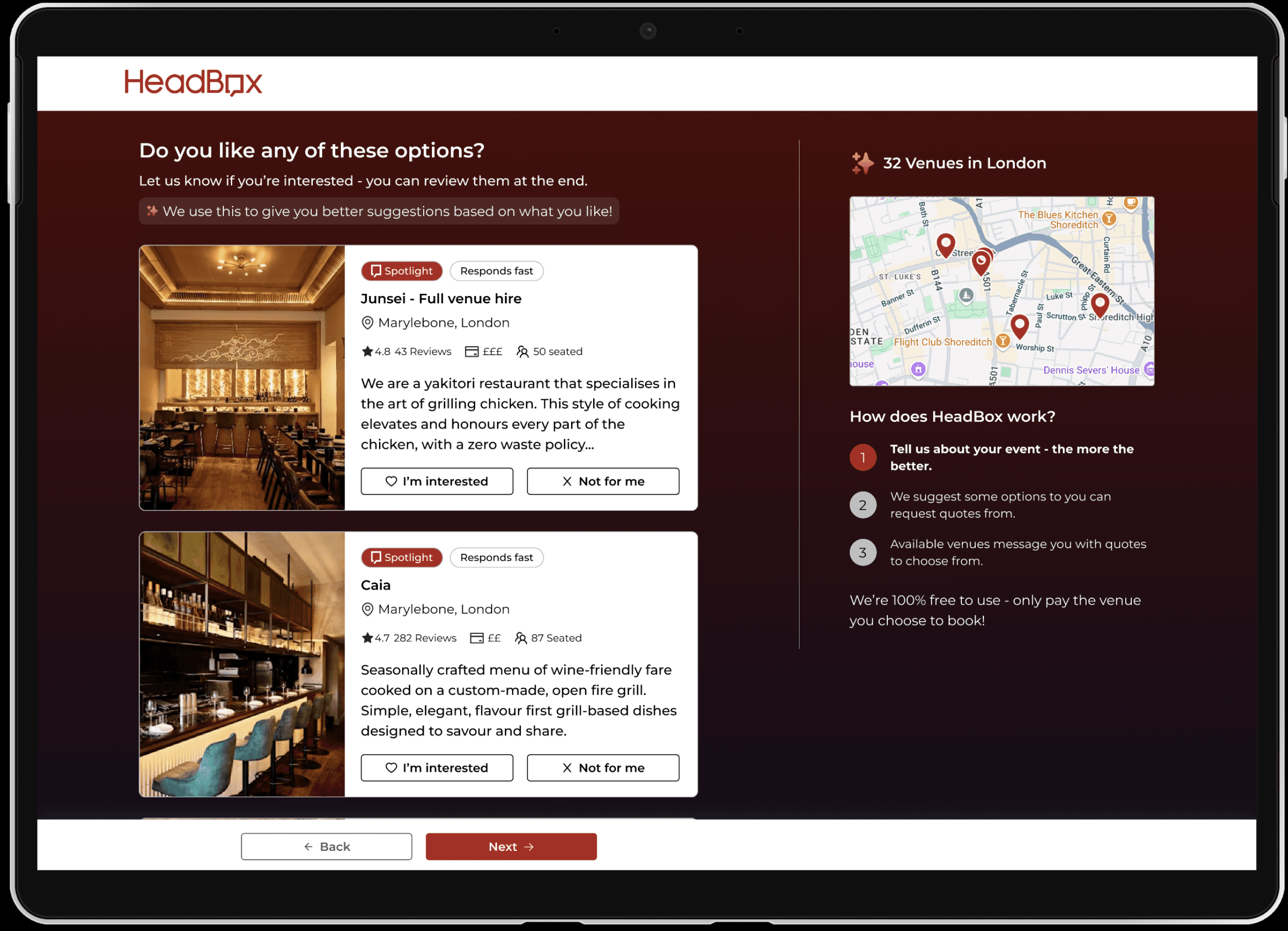
Recommended venues before submission
Gated account creation
Choices - guests can choose more than 1 venue to get quotes from
What didn’t work in V1
Recommendation engine ran in the background, causing slow load times for some users.
Open free-text input created high cognitive load and the largest drop-off.
Users weren’t ready to create accounts at that stage of intent.
Showing venues before sign-up encouraged scraping and low-intent exits.
Outcome
Friction was misaligned with user intent, suppressing brief volume below viable marketplace levels.
What did work in V1
Users who completed the flow showed strong intent: 62% shortlisted venues (2.2 average), with selections skewing toward paying hosts.
Structured inputs improved requirement clarity and recommendation quality, but the step drove significant drop-off and was removed in V2 to prioritise scalable volume.
13 step process, gathering requirements from preset options - 83% drop off rate
Results:
Learnings & Iterations
Made the prompt optional to reduce friction.
Reintroduced soft account creation via magic link.
Gated venue recommendations behind soft sign-up to prevent scraping.
Optimised recommendation engine load times.
Outcomes & Tradeoffs
40% of users skipped the prompt.
Removing account creation increased brief completion.
LeadFeed remains a fallback for locations with limited inventory.
Venue Finder saw a 5% drop in submissions vs. the legacy brief builder, but was retained in high-inventory regions with more paying suppliers.
Edge case handling:
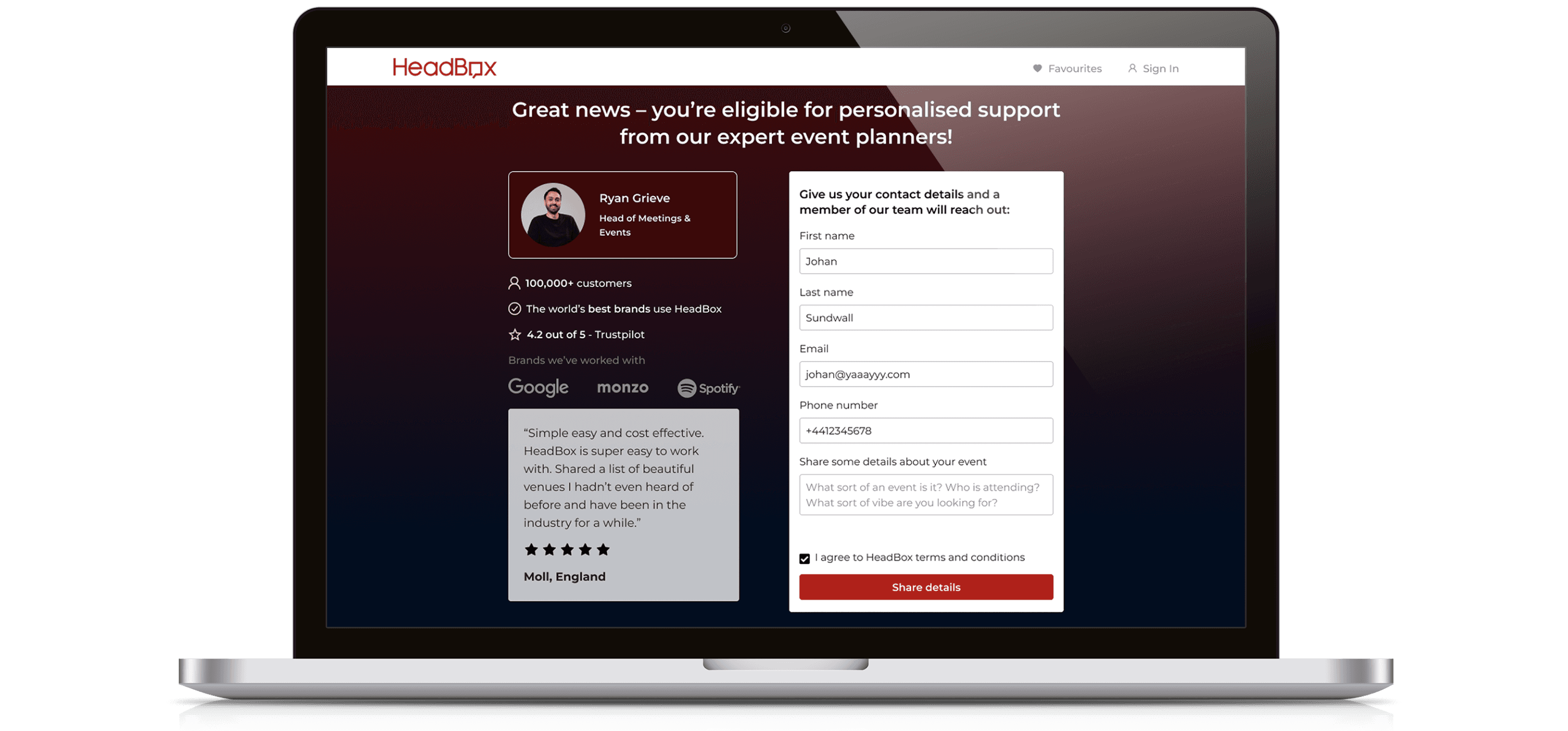
High-value briefs outside active inventory regions are triaged to a human account manager, ensuring premium demand is retained and serviced beyond platform constraints.
Challenges
Strong executive attachment to legacy Lead Feed
Marketing KPIs tied to submission volume
Technical constraints in recommendation quality
My approach:
Reframed debate around marketplace economics
Made trade-offs explicit
Used experimentation over opinion
Used disruption as learning, and identifying the points of friction to inform iteration
What's next?
Improve ranking via live conversion-weighted signals
Introduce shortlist-first flow for repeat users
Deploy agent-assisted city launch mode
Further decouple marketing volume from marketplace health metrics